
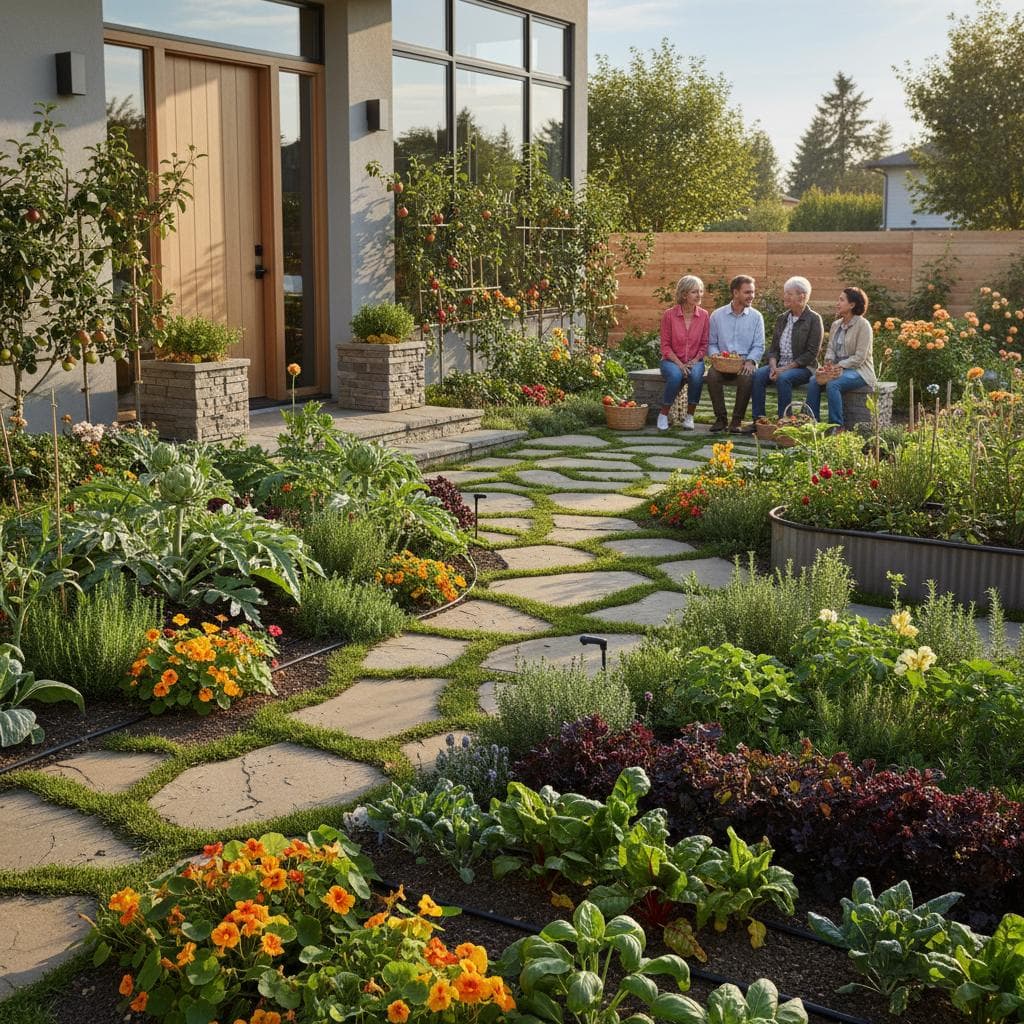
Edible Front Yards That Look Polished, Not Messy
A front yard filled with herbs, fruit trees, and vegetables delivers the same visual appeal as traditional ornamentals while adding fresh produce. Thoughtful design turns the most visible part of a property into a productive space that supports daily harvests and seasonal rhythms. The result maintains curb appeal and invites interaction from passersby.
At a Glance
- Location: Residential front yards
- Size: Suitable for small urban lots or larger suburban parcels
- Climate Zone: Adaptable through appropriate plant choices
- Project Goal: Replace decorative plantings with edible species that preserve visual structure and year-round interest
1. Start with a Plan That Fits the Neighborhood
A front yard garden succeeds when it aligns with surrounding homes and the architectural style of the property. Raised beds, gravel paths, and low retaining walls create clear boundaries that keep plantings orderly. Strong geometry in the layout prevents a scattered appearance and simplifies routine care.
Place taller crops such as okra, corn, or trellised beans toward the rear or along fences. Position lower herbs and greens near the front to preserve sightlines to the house. Brick edging, steel borders, or decomposed granite pathways reinforce order and ease access during harvest.
2. Choose Edibles That Look as Good as They Taste
Select plants with attractive foliage, flowers, or growth habits. Blue-green kale, ruby chard, and purple basil introduce color contrast. Strawberries cascade over edges while rosemary forms evergreen mounds that remain structured throughout the year.
Pair leafy crops with flowering herbs such as thyme or lavender to support pollinators and add fragrance. In warm regions, citrus trees or figs supply height. In cooler zones, espaliered apples or pears line fences neatly. Repeat colors and leaf shapes across beds to create visual unity.
3. Layer Plants for Structure and Variety
Combine trees, shrubs, and ground covers to fill space efficiently. Fruit trees form the upper layer, berry bushes occupy the middle, and herbs or greens cover the soil. This arrangement improves resilience, suppresses weeds, and retains moisture.
Plant dwarf apple trees above blueberry bushes, then underplant with creeping thyme or oregano. The varied heights guide the eye through the garden and produce food at multiple levels.
4. Design for Year-Round Interest
Maintain structure when harvests slow by combining evergreen herbs with deciduous fruiting plants. Artichokes, rosemary, and bay laurel provide lasting form. Kale and collard greens supply color in cooler months. Mulch pathways with wood chips or gravel and add stone or metal edging to keep beds defined during dormant periods.
5. Add Inviting Paths and Gathering Spots
Paths and small seating areas turn the front yard into an interactive space. A bench under a fruit tree or a bistro table beside an herb bed encourages visitors to pause. Match materials to the home architecture, such as brick for traditional styles or crushed granite for modern designs. Wide pathways allow comfortable access for harvesting and maintenance.
Warm-toned lighting around 2700 K highlights foliage in the evening. Solar fixtures along borders mark edges safely and conserve energy.
6. Manage Water Wisely
Group plants according to water requirements so irrigation remains consistent. Install drip lines or soaker hoses beneath mulch to deliver moisture directly to roots. In dry regions, select drought-tolerant options such as olive trees, pomegranates, thyme, or sage. Raised beds improve drainage in wetter zones. Rain barrels provide supplemental water during dry spells.
7. Attract Pollinators and Beneficial Insects
Integrate nectar-rich flowers such as borage, calendula, or salvia among edibles to support pollination. Companion plantings like marigolds near tomatoes deter pests while nasturtiums draw aphids away from greens. A shallow water dish or small rock pile offers resting spots that encourage biodiversity.
8. Keep Maintenance Practical and Enjoyable
Choose perennial herbs and fruit bushes that require minimal replanting. Raised beds reduce bending and define work areas. Install trellises early so plants grow vertically rather than sprawling. Compost bins placed behind shrubs or fences process trimmings and supply nutrients for future seasons.
9. Blend Edibles with Ornamentals for Balance
Mix decorative grasses such as little bluestem with leafy crops for textural contrast. Flowering perennials like echinacea or black-eyed Susan fill seasonal gaps and support pollinators. Low boxwood hedges define vegetable beds while climbing roses share trellises with beans.
10. Share the Harvest and the Experience
An edible front yard becomes a social space when produce is offered to neighbors. A harvest basket at the gate or a small sign identifying plants sparks conversation and curiosity. This openness connects the garden to the surrounding community and demonstrates how productive landscapes can enhance daily life.
Enjoy Daily Harvests from a Welcoming Space
Consistent attention to structure, plant selection, and maintenance transforms a front yard into a source of both beauty and fresh food. The design supports curb appeal while delivering practical benefits that grow with each season.