
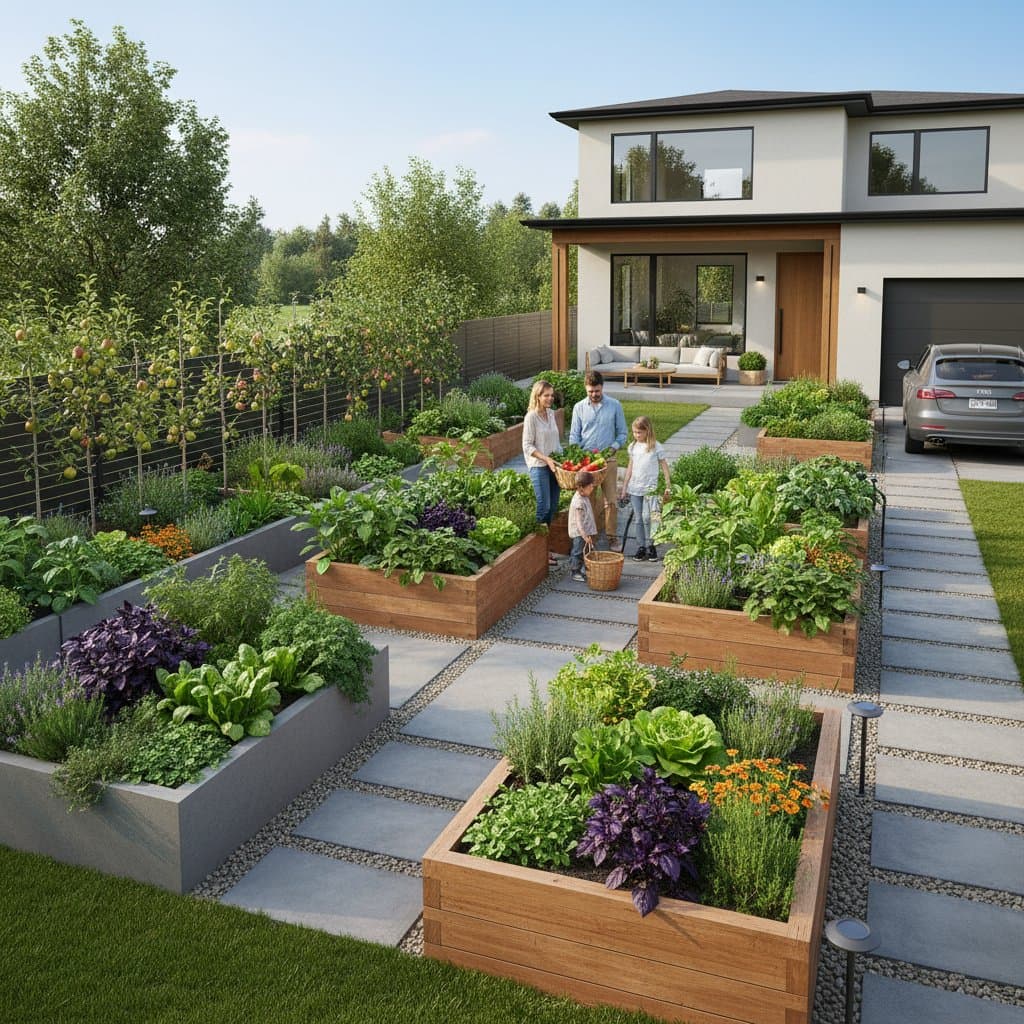
Transform Your Front Yard into a Profitable Edible Garden: Earn $3,000 Annually
A thoughtfully designed front yard offers more than visual appeal to passersby. It provides fresh produce for your family, cuts down on supermarket expenses, and delivers a tangible return on investment. In regions like California with favorable climates, an edible garden in the front yard merges aesthetics, environmental benefits, and financial gains into a single, impactful endeavor.
Rethinking the Front Yard Landscape
Conventional grass lawns demand significant water, fertilizers, and upkeep while offering little in return. Replacing them with edible elements shifts the focus to productivity. This change creates a functional pantry that enhances pollinator habitats and sparks interest among neighbors.
Edible front yards avoid a utilitarian appearance through careful integration. Incorporate raised beds edged with native flowers, fruit trees serving as natural shades, and herb-lined paths. Such arrangements produce an organized, inviting environment that prioritizes both form and function.
Planning for Productivity and Enjoyment
Begin by evaluating your yard's available space and sunlight exposure. Edible plants typically require a minimum of six hours of direct sun daily, so map out light patterns throughout the day. Develop a layout that segments the area: position perennial trees and shrubs along boundaries, place annual vegetables in central raised beds, and situate low herbs or companion flowers at the borders.
Select plants suited to your local conditions that maximize output per area. In California, reliable choices include tomatoes, peppers, various greens, strawberries, citrus varieties, and figs. Incorporate herbs such as basil, oregano, thyme, and rosemary to ensure ongoing harvests and sensory interest.
Focus on high-volume and durable options to build returns. One established lemon tree might yield over 200 fruits per season, and a modest bed of kale or Swiss chard supplies greens for several months. Pair fast-maturing crops with enduring perennials to maintain steady production and reliable value.
Estimating Realistic Returns
Achieving $3,000 in yearly value from a front yard garden requires strategic execution, yet remains attainable. This total arises from savings on personal consumption, revenue from surplus sales, and earnings from processed items.
Consider this breakdown:
- Savings on household consumption: Cultivating organic vegetables and herbs replaces purchased items, potentially saving $800 to $1,200 per year for a typical family.
- Revenue from excess output: Market surplus items like tomatoes, herbs, or fruits via local networks or stands to generate $1,000 to $1,500 annually.
- Income from preserved products: Create and sell items such as sauces, jams, or dried herbs, adding $300 to $500 more through appealing packaging.
These estimates vary based on garden size, dedication, and crop management. A compact front yard can attain this threshold by rotating plants effectively and choosing productive varieties.
Integrating Aesthetics with Utility
Maintaining neighborhood standards demands attention to visual harmony, particularly under association rules. Achieve this by weaving edibles into structured elements. Effective techniques include:
- Layered borders: Pair vibrant lettuces or multicolored chard with decorative grasses or salvia for depth and color.
- Anchor points with fruit trees: Use compact dwarf citrus or trained espalier apples to outline paths or frame views without overwhelming the space.
- Structured raised beds: Frame them with redwood, stone, or metal for a crisp edge that signals deliberate care.
- Defined pathways and highlights: Install stepping stones, support trellises for climbers, or add a compact bench to elevate the yard as a focal point.
These methods ensure the garden serves practical needs while enhancing property value as a lasting feature.
Optimizing Water Use, Soil Health, and Upkeep
In arid areas like California, efficient watering proves essential. Install drip systems with automated timers to deliver moisture precisely and minimize evaporation. Apply mulch layers of bark chips, straw, or leaf compost to conserve water and control weed growth.
Build robust soil as the foundation for success. Conduct a soil analysis to identify pH and nutrient profiles, then amend with compost, worm castings, or balanced organic amendments. A thriving soil ecosystem fosters vigorous growth and superior yields over seasons.
Incorporate maintenance into daily routines for sustainability. Dedicate 10 to 20 minutes weekly to tasks like harvesting, which stimulates further production, and pruning to avoid density issues. Consistent effort keeps even a small front yard garden highly effective.
Collaborating with Landscape Experts
Homeowners seeking a refined installation benefit from specialists in edible designs. These professionals draft compliant plans, set up irrigation, and promote enduring viability. Initial costs yield returns through enhanced longevity and seamless integration.
Local nurseries provide region-specific advice on top-performing cultivars, organic pest strategies, and planting schedules. Blending expert recommendations with hands-on involvement results in a durable, high-output garden.
Monetizing Your Harvest
To generate income, initiate efforts on a local scale. Participate in community exchanges, farmers' markets, or roadside stands with homegrown items. Dried herbs command higher prices when bundled attractively, while specialties like lemon preserves, spicy jams, or herb-infused oils develop into distinctive offerings.
Monitor costs against earnings to gauge true profitability. Gardeners often find that refined presentation and consistent quality accelerate financial gains. Self-sufficiency remains the core aim, yet supplemental income amplifies overall satisfaction.
Sequencing Seasons for Continuous Output
Sustain productivity through crop rotation that preserves soil integrity and deters pests. Key seasonal shifts include:
- Cooler periods: Plant lettuces, peas, carrots, and beets for steady cool-weather yields.
- Warmer periods: Transition to tomatoes, peppers, melons, and squash for summer abundance.
- Evergreen perennials: Rely on herbs, berries, and fruit trees for baseline production year-round.
This approach guarantees ongoing harvests and refreshes the garden's appearance with evolving colors and forms aligned to natural cycles.
Building Lasting Garden Rewards
Beyond monetary benefits, an edible front yard fosters deeper connections to nature and community. It promotes sustainable practices, elevates local beauty, and delivers the satisfaction of homegrown nourishment. As soil enriches and plants establish, efficiency rises while effort diminishes.
Track progress through yields and savings to appreciate growth. This evolving space not only offsets costs but also enriches daily life with purpose and plenty. In California's vibrant setting, such a garden embodies innovation, stewardship, and enduring prosperity.