
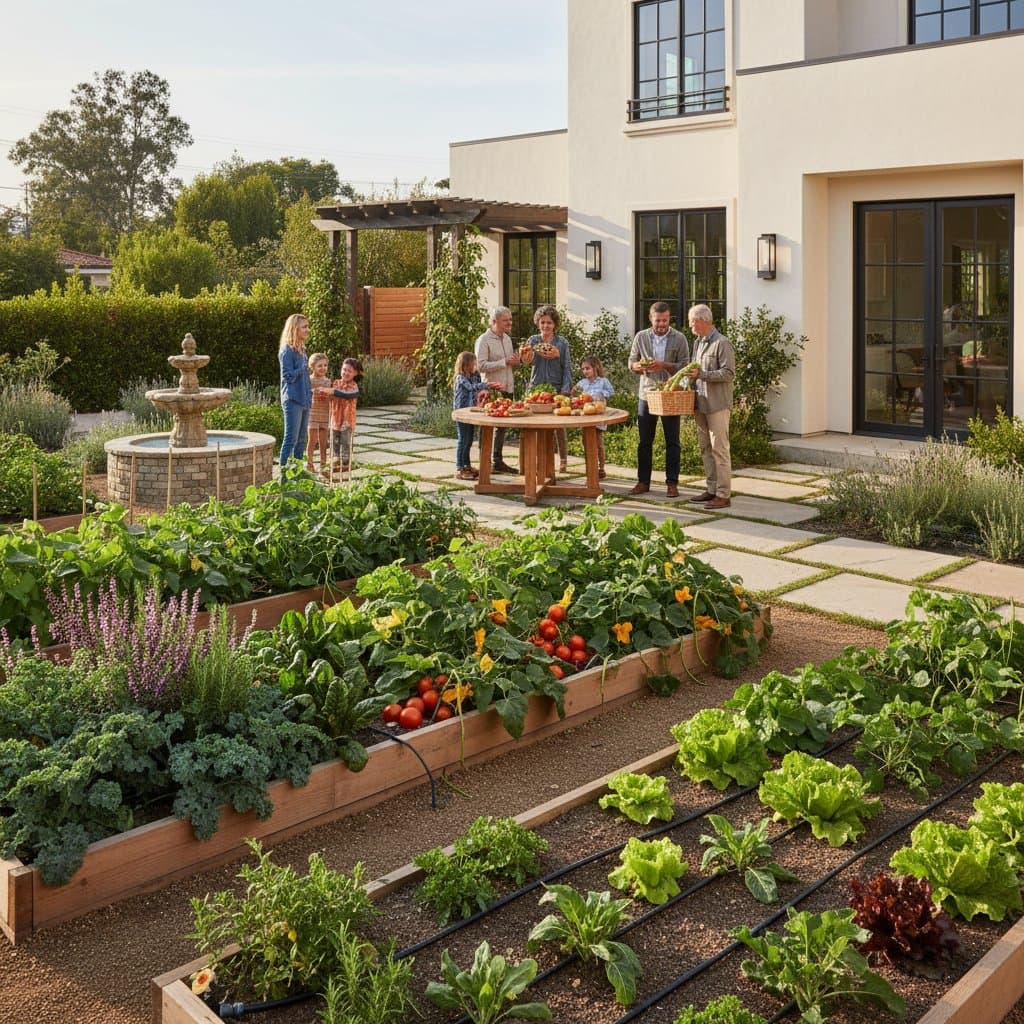
Edible Front Yards Fuel Local Food Security
Homeowners across California are replacing traditional lawns with productive edible landscapes. These spaces deliver fresh produce while enhancing neighborhood aesthetics and resilience. The shift supports household needs and strengthens community ties through shared harvests.
Why Front Yards Now Serve as Gardens
Front yards once functioned mainly as ornamental displays with trimmed lawns and shrubs. Rising food prices and environmental concerns have prompted a reevaluation of this space. Residents seek designs that combine visual appeal with practical yields. California growing conditions favor this approach through extended seasons and suitable plant varieties.
Replacing turf reduces water consumption and maintenance demands. It also generates regular harvests that improve household food access. Many neighborhoods now view productive yards as a standard for modern curb appeal.
Design Principles for Productive Spaces
Effective edible front yards follow structured planning rather than random planting. Begin by assessing sun patterns, soil conditions, and existing features. Position sun loving crops such as tomatoes and peppers in open areas. Fill shaded sections with leafy greens like kale and lettuce.
Layer Plants for Depth and Yield
Anchor the layout with taller elements including citrus or pomegranate trees. Add mid level shrubs such as blueberries and rosemary for form. Complete the arrangement with low growing options like strawberries and thyme. This layering maximizes space and creates visual balance.
Incorporate Functional Elements
Install raised beds, stone edging, and gravel paths to organize the area. These features improve drainage and ease access. Add seating or trellises to encourage use and interaction. The result invites both harvesting and neighbor conversations.
Combine Plant Types for Harmony
Integrate vegetables, herbs, and flowers to support biodiversity. Marigolds provide color and pest deterrence. Lavender draws pollinators while adding scent. Borders of rainbow chard offer striking texture comparable to traditional groundcovers.
Sustainability Practices
Edible yards lower grocery expenses and support local ecosystems. Drip irrigation combined with mulch maintains consistent moisture. Select drought tolerant plants such as figs, olives, and artichokes for dry periods.
Build soil health through regular additions of compost and organic mulch. These inputs foster beneficial organisms and reduce external requirements. Seasonal rotations keep production steady throughout the year.
Address Regulations and Upkeep
Review municipal rules on plant heights, property lines, and enclosures prior to installation. Many areas now encourage edible landscaping for its environmental advantages. Maintain an intentional appearance to align with community standards.
Group plants according to shared water and light needs. Prioritize perennials if time for care is limited. Employ netting and companion planting to manage pests without chemicals.
Community Connections
Productive yards draw neighbors together for recipe exchanges and harvest sharing. Children observe food growth in daily surroundings. Local seed swaps and garden tours extend individual efforts into broader neighborhood benefits.
Materials and Adaptability
Select durable options such as stone or redwood for beds and paths. These choices sustain appearance while minimizing future work. Design with room for adjustments as needs or preferences evolve.
Launch Your Edible Yard
Start with one raised bed or herb border to build experience. Expand gradually based on results and enjoyment. This method creates lasting value through reduced costs and increased self sufficiency.