
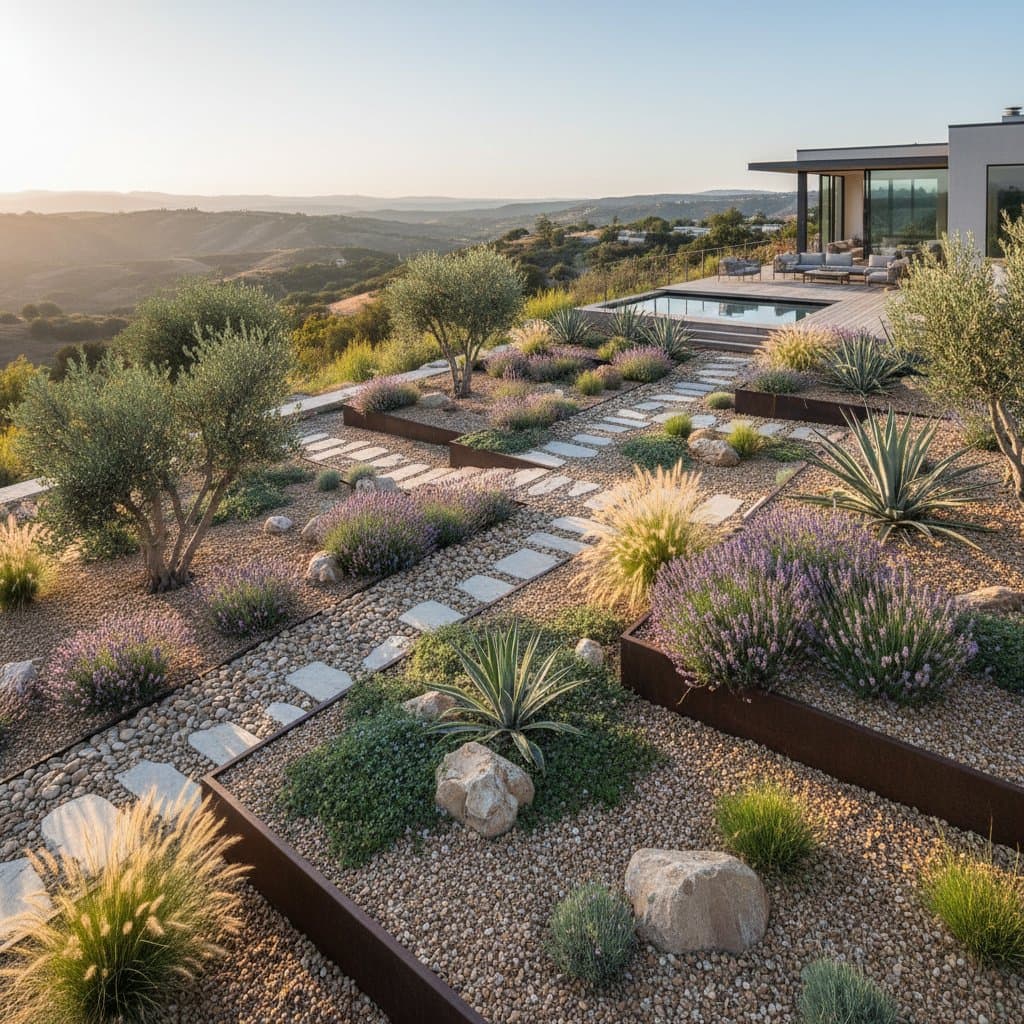
Gravel Gardens: Achieve 60 Percent Savings in Low-Maintenance Yard Design
Lisa and Mark wanted to turn their sloping backyard into a landscape that demanded little weekend effort. They chose a gravel garden with drought-tolerant plants and stone paths, which now saves them nearly 60 percent on annual maintenance costs compared to their old lawn.
This method solves typical issues on sloped land, such as erosion from grass, heavy watering needs, and constant fixes. Gravel offers a tough, water-saving option that boosts both use and beauty.
Project Overview
- Homeowners: Lisa and Mark, professionals who work from home
- Property: Suburban hillside lot
- Area: About 1,800 square feet of exterior space
- Landscape Designer: Terra Forma Landscape Design
- Builder: Green Edge Builders
- Aesthetic: Mediterranean-style gravel garden with native species
- Primary Materials: Crushed granite, river rock, steel edging, decomposed granite pathways, corten steel planters
These components create a unified design that balances practical use with striking visuals.
Principles of Design for Efficiency and Economy
The homeowners targeted the patchy turf that used too much water and time. The designer suggested a gravel-focused plan, which builds layered looks while easing upkeep. Gravel gardens suit various climates and soils, allowing rainwater to soak in, blocking weeds, and supporting low-water plants.
"People often see gravel as boring, but it is not," the designer said. "Textures stand out when you mix stone, metal, and tough plants."
Lisa and Mark agreed right away. They picked colors and textures that match their home's light stucco walls and dark wood details, creating a smooth link between inside and outside spaces.
Start your project by checking your slope's steepness and sunlight. Measure the space to figure gravel needs, usually 2 to 4 inches deep for a solid base. Review local rules on erosion to stay compliant.
Spatial Organization
The design divides the yard into three clear zones for easy movement and defined uses. Near the house, a dining terrace with corten steel planters works well for meals and guests. A winding path of decomposed granite leads past clusters of lavender, feather grass, and agave. At the edge, a dry stream bed lined with polished river rock adds beauty and handles runoff.
Gravel types change by area purpose. The terrace uses packed crushed granite for steady steps. Paths feature fine decomposed granite mixed with a polymer binder for a even walk. The stream bed has smooth boulders to guide water in storms.
This setup creates a flowing view that skips grass and follows the land's shape. On slopes steeper than 15 percent, add terraces with retaining walls to hold soil in place.
Strategic Plant Selections
Plant picks focus on color, shape, and strength to keep the garden attractive with little work. Lavender, sage, and rosemary add scents and draw bees. Agave and yucca bring strong, sculptural shapes. Blue fescue clumps offer gentle texture and change hue in different lights. These plants root fast and need water only now and then once set.
Prepare soil by mixing in coarse sand and organic compost for better drainage. Lay a permeable geotextile fabric beneath the gravel to stop weeds while letting water pass. Set up drip irrigation below ground to target roots and cut evaporation loss.
Choose natives for your area to build toughness; in dry regions, try sedum succulents with evergreen shrubs. Plant 18 to 24 inches apart so they grow full without crowding.
Material Specifications and Durability
- Gravel Composition: Crushed granite in neutral beige tones for warmth and unity
- Boundaries: Powder-coated steel edges to define beds and stop spreading
- Containers: Corten steel pots that patina naturally for a weathered look
- Walkways: Decomposed granite with eco-friendly binders to control dust
- Furnishings: Precast concrete benches with cedar tops that resist weather
Materials stress long life and ease. Corten steel forms its own rust shield, so no paint required. Gravel holds up to traffic without mowing, weeding, or feeding. Maintenance means light raking and adding gravel every three to five years.
Get gravel from green quarries to support eco aims. Sample colors in your sun to check if they hold true.
Benefits Realized in Daily Use
Switching from grass to gravel changed how Lisa and Mark enjoy their yard. They hold gatherings free from mud tracks or stains. Water bills dropped a lot, and chores limit to light pruning and clearing. "Our weekends stay free," Lisa said. "We spend time enjoying, not fixing."
If you plan this change, build the base structure first, then add plants and textures. Gravel gardens bring lasting savings, strong style, and a rhythm that fits modern life. Careful choices lead to a yard that looks sharp with little work.