
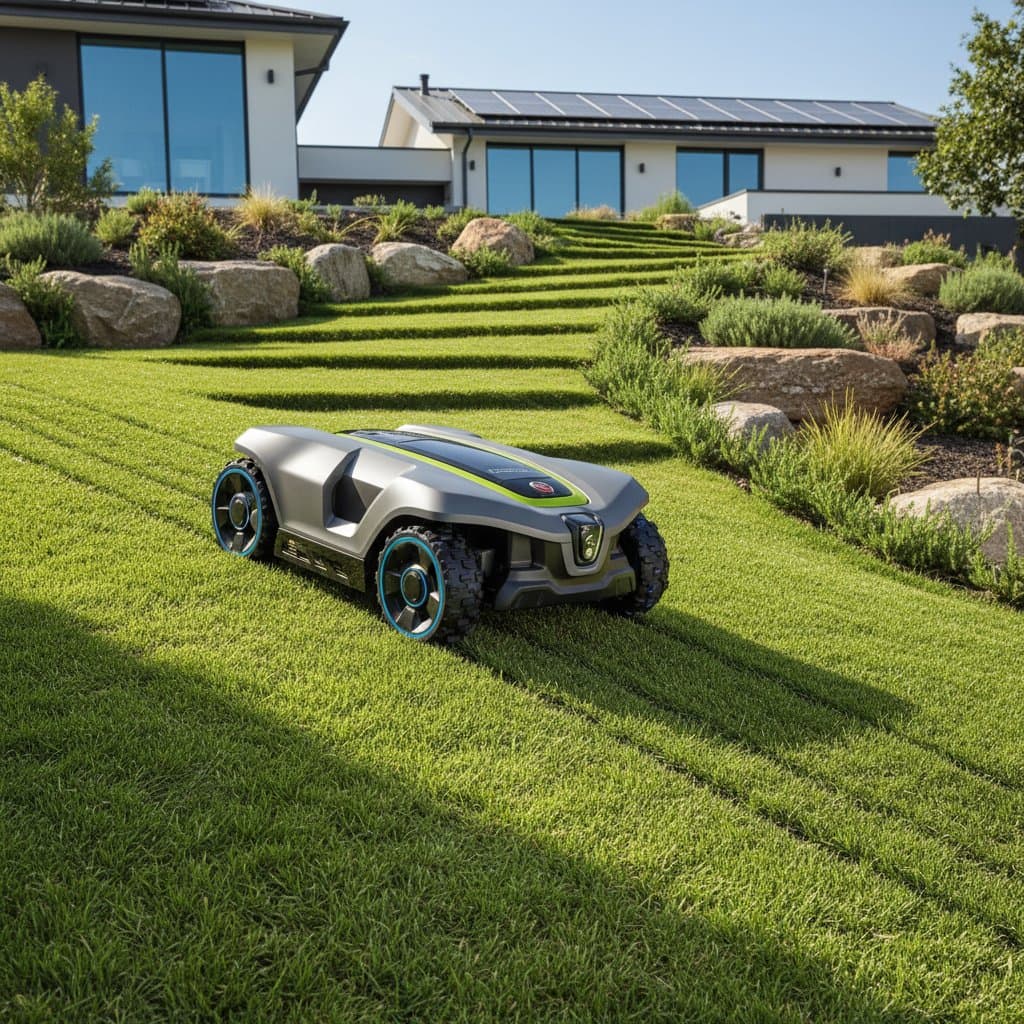
Robotic Mowers Conquer Steep Slopes and Challenging Terrains
Lawn care on sloped or uneven properties requires significant effort and carries safety concerns. Homeowners with hilly landscapes often struggle with inconsistent cuts and physical strain from manual mowing. Advanced robotic mowers solve these challenges with cutting-edge traction, navigation, and sensor systems that deliver precise results across tough terrain while cutting down on manual work and supporting eco-friendly habits.
Homes on elevated or rolling land gain the most from these innovations. Slopes that previously presented dangers now receive meticulous attention, boosting property aesthetics and lessening environmental strain.
Key Technologies for Navigating Uneven Ground
Robotic mowers use a combination of sensors, gyroscopes, and smart algorithms to handle complex yards effectively. Current models generate detailed digital maps of the lawn, adjusting to slopes as steep as 45 degrees and bumpy surfaces. They detect boundaries through perimeter wires or GPS, allowing instant changes to their route and pace.
Improved traction comes from tough wheels with deep grooves and systems that shift weight to avoid slipping. Motors vary their output based on conditions, providing steady performance on damp grass or soft earth. These features ensure full coverage, with the mower holding a consistent blade height for even trimming during uphill climbs or downhill runs.
Essential Design Elements for Slope Performance
Top robotic mowers include components built for harsh environments. When choosing a model, focus on these vital features:
-
Low Center of Gravity: Even weight placement maintains balance and lowers the chance of tipping on slopes over 30 degrees.
-
Rugged All-Terrain Wheels: Suspension that flexes and treads that grip manage mud, morning dew, or sand without harming the grass.
-
Dynamic Speed Adjustment: Built-in sensors alter speed to fit the landscape, preventing rushes on downhills or strain on uphills.
-
Durable Weatherproofing: Enclosures with IP ratings shield internals from rain and sun, supporting use in diverse weather.
-
Precision Mapping Systems: Technologies like RTK GPS or LiDAR build exact lawn layouts, refining paths and extending battery life.
Such designs promote healthier turf by offering regular, light trims that encourage deep roots and ease grass pressure.
Effective Installation and Adjustment Strategies
Correct installation enhances results on inclined lots. Start by mapping the yard to note slopes, barriers, and entry routes. Lay boundary wires 10 to 20 centimeters inside edges to steer clear of risky drops.
On properties with multiple levels, add guide wires to connect sections for secure movement between areas. Set blade height at 2 to 4 centimeters for sloped areas, and program slope limits to 35 degrees at first. Conduct trial operations to fine-tune options, like slowing down on rises to avoid missed spots.
Landscaping experts can help integrate the system smoothly. In areas with ongoing yard care, coordinate the mower with watering and feeding plans for best outcomes.
Optimizing Power Management and Sustainability
Lithium-ion batteries deliver 60 to 120 minutes of mowing time before automatic return to the charging base. Site the docking station on level ground close to main routes to shorten travel distances.
Smart functions adjust blade speed to grass thickness, saving power. The mulching process turns clippings into natural nutrients, potentially reducing fertilizer use by 30 percent. In sunny locations, pair with solar charging bases to cut dependence on electrical outlets.
Ensuring Safety and Operational Dependability
Built-in safeguards feature tilt sensors that stop the blades if the mower tips, plus bumpers that detect and dodge obstacles. App-based geofencing restricts activity to set boundaries, sending alerts for any boundary breaches.
Protective covers enclose the blades to limit risks to pets or family members. Plan mowing for quiet times when people and animals stay clear, and clean the underside and wheels each week to clear buildup.
Regular firmware updates improve detection of hurdles and route planning. Replace blades yearly to keep cuts sharp and accurate.
Robotic Versus Manual Mowing: A Practical Comparison
Robotic mowers shine in regular upkeep but fit certain situations best. Weigh options using these points:
Robotic Mowers
- Handle scheduled mowing with little oversight
- Run quietly to meet local sound rules
- Avoid fuel and exhaust for cleaner operation
- Offer app controls for tracking and tweaks
- Require upfront cost and initial setup
- Ideal for slopes below 50 degrees with few large barriers
Manual Mowers
- Provide flexibility for custom patterns
- Need user effort and schedule time
- Produce sound and emissions from motors
- Give real-time control and observation
Many find a hybrid method works well: robots for steady care, manual for borders or thick patches.
Seamless Connection to Home Automation
These mowers work with platforms such as Google Home or Alexa for voice commands and updates. Mobile apps pull in weather data to pause operations during rain, protecting the machine and ground.
In dry climates, connect to intelligent watering systems for timed sequences that avoid excess moisture after cuts. This integrated method streamlines resource handling throughout the yard setup.
Broader Impacts on Environment and Daily Life
Regular shallow mowing builds grass toughness, limiting weeds and thirst for water. Without gas power, these units cut carbon emissions to support green living.
Users free up hours for planting or relaxation with loved ones. Remote monitoring helps those away from home, and safe slope handling removes dangers like slips.
Investment Considerations and Lasting Performance
Basic models begin around $800, while advanced slope handlers go up to $3,000. Select based on lawn dimensions and slope specs, choosing wider cutting widths for bigger spaces.
Sturdy builds use rust-proof materials and replaceable parts for simple fixes. Proper maintenance yields 5 to 10 years of use, balancing expenses with saved time and lower service bills.
Store units in dry spots during off-seasons to protect parts. Consistent care leads to thriving, vibrant lawns over time.
Achieving Lush, Low-Effort Landscapes
Robotic mowers bring tough yards up to flawless levels with dependable automation. Owners enjoy thriving, earth-friendly areas that require minimal work and provide maximum pleasure.