
The Advantages of Foodscaping Over Conventional Lawns
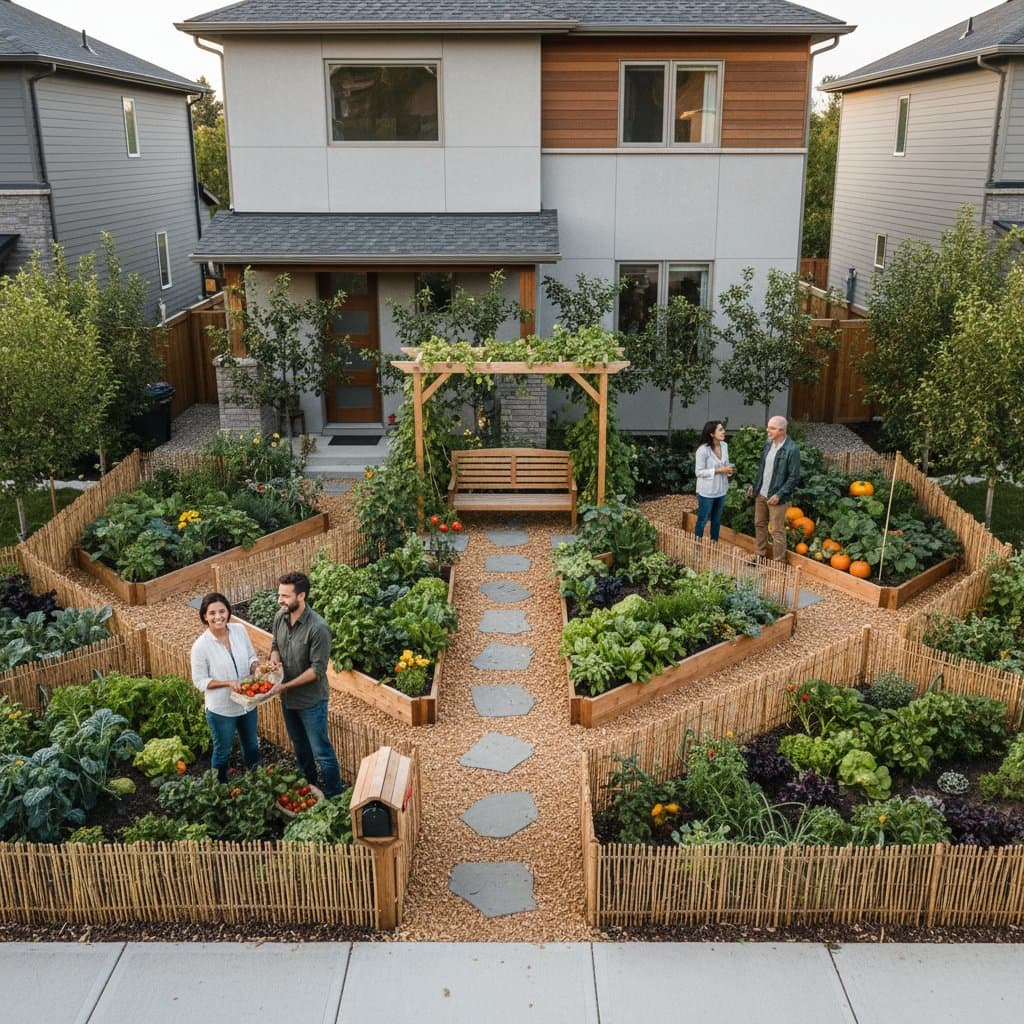
Maya and Daniel purchased a modest corner lot with a vision beyond routine lawn maintenance. They aimed to cultivate a front yard that yielded fresh produce, fostered neighborly interactions, and rivaled the elegance of traditional ornamental gardens. By substituting grass with herbs, fruit trees, and elevated planting beds, they established a lifestyle that integrates visual charm with practical utility.
Redesigning the Front Yard Landscape
The initial lawn demanded weekly mowing, regular irrigation, and applications of chemical fertilizers. Although it appeared neat, the space lacked vitality. The revised layout incorporates defined planting beds outlined by gravel walkways, with low retaining walls constructed from reclaimed stone to delineate zones and align with the home's modern architecture.
"People often assume a food garden must appear unkempt," noted the designer. "However, applying the same principles of structure and composition as in ornamental gardens elevates it to a sophisticated extension of the living space."
Selecting Plants for Functionality and Aesthetics
Every section of the garden fulfills dual roles in utility and design. Adjacent to the entrance, lavender, sage, and thyme provide aromatic interest for passersby, their gray-green leaves complementing the tender hues of lettuce and kale. Central beds accommodate rotating crops of seasonal vegetables to preserve soil health, while citrus trees occupy the outer edges in sizable terracotta pots that allow mobility during temperature fluctuations.
Visual dynamics emerge from strategic color and texture choices. Varieties such as red-stemmed Swiss chard, deep purple basil, and vibrant marigolds offer striking contrasts without dependence on non-edible blooms. Thoughtful arrangement ensures that even productive plants contribute to compelling visual arrangements.
"Each plant must justify its place," Maya explained. "Whether it provides nourishment, draws in pollinators, or enhances coloration, it secures a role in this space."
Implementing Efficient Irrigation and Soil Management
A flourishing food garden relies on nutrient-rich soil and reliable hydration. The installation features a subsurface drip irrigation system linked to an intelligent controller that modifies schedules according to local weather patterns. This approach minimizes water loss through evaporation and targets roots precisely for optimal absorption.
The family incorporates compost derived from kitchen scraps to amend the beds annually, thereby recycling nutrients effectively. Rather than widespread fertilizer use, they apply worm castings and leaf mold as top dressings to enhance soil texture, promote drainage, and sustain ecological equilibrium. Consequently, maintenance time has decreased compared to previous lawn duties, while the garden exudes greater vibrancy.
Navigating Seasonal Changes
The garden adapts seamlessly across seasons while preserving its form. During cooler periods, brassicas, greens, and root vegetables dominate the plantings. In warmer months, tomatoes, peppers, and pole beans ascend trellises fashioned from repurposed bamboo for vertical growth.
Perennial herbs provide year-round stability to prevent any barren appearance. Structural elements like stone edging, persistent shrubs, and gravel paths maintain a polished look during fallow periods. This equilibrium between output and ornamentation defines an effective front-yard edible landscape.
Designing for Community Engagement
A food garden often piques local interest and encourages dialogue. Neighbors frequently pause to inquire about sidewalk-adjacent varieties or exchange personal cultivation experiences. The accessible configuration promotes interaction without compromising privacy, complemented by a subtle boundary fence of weathered steel that preserves open views.
The overall style harmonizes with surrounding properties. Plant selections and material finishes mirror adjacent decorative gardens, fostering unity rather than contrast. Subtle integrations, such as coordinating stone tones with the house foundation and employing precise-edged containers, underscore the deliberate craftsmanship.
Benefits Extending Beyond Harvests
Converting a lawn to a foodscape yields advantages that surpass culinary yields. The plant diversity draws pollinators like bees and butterflies, along with avian visitors. Enhanced foliage coverage mitigates urban heat, and the design curtails water consumption by forgoing high-demand grass.
Soil conditions foster microbial life instead of dense turf compaction. On the economic front, the couple reports reduced expenditures on landscaping services and food purchases. From a personal perspective, the shift has enriched their routine. "We begin and conclude each day outdoors," Daniel shared. "Gathering greens for meals or inspecting the citrus trees integrates seamlessly into our home life."
Maintaining the Foodscape Design
Long-term viability hinges on regular involvement. Maya and Daniel view garden upkeep as an inherent aspect of household care. They trim fruit trees during early spring, refresh green plantings with seasonal turns, and clear pathways routinely to uphold tidiness.
For those contemplating a comparable overhaul, prioritize foundational elements first. Establish walkways, borders, and key features prior to plant introduction. Opt for durable, aging-graceful materials and climate-appropriate edibles. The objective remains a cohesive landscape that endures evolving yields.
Ultimately, a meticulously designed foodscape redefines the front yard as an interactive ecosystem that sustains residents and bolsters community ties. It supplants uniformity with intentionality, delivering daily infusions of color, form, and sustenance. For numerous homeowners, this fusion of elegance and productivity represents the pinnacle of inviting exteriors.