
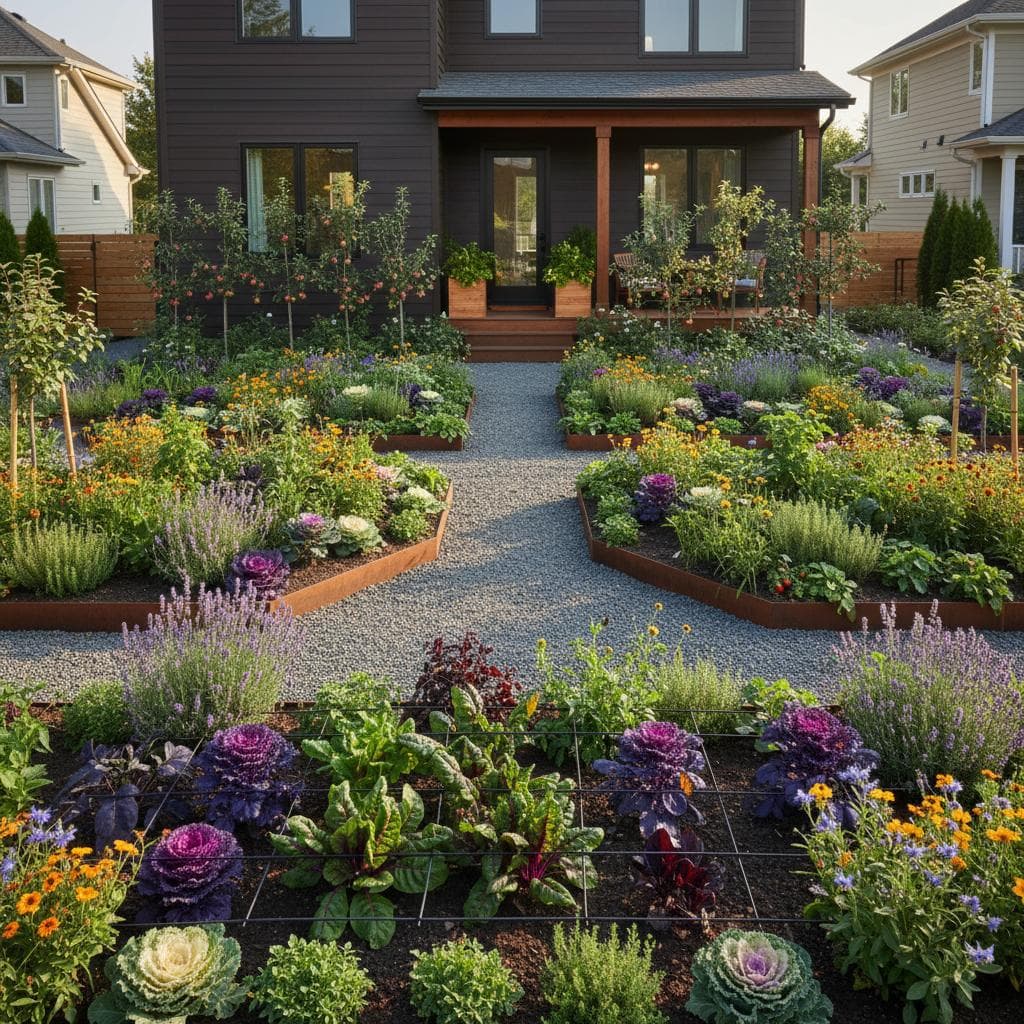
Transform Your Front Yard into an Edible Oasis
Edible landscapes convert front yards into vibrant, productive areas that combine aesthetic appeal with practical benefits. Picture borders brimming with herbs, brick-lined raised beds, and fruit trees that frame the street view. This approach replaces monotonous lawns with spaces that deliver color, texture, and seasonal changes, drawing admiration from neighbors.
Such a yard reflects thoughtful stewardship and innovation. It fosters connections with the local environment, aids pollinators, and sparks discussions. Proper planning ensures the design rivals traditional ornamental gardens while supplying fresh produce steps from your door.
1. Establish Defined Zones
Structure forms the foundation of an effective edible front yard. Paths, borders, and distinct planting areas signal deliberate design rather than disorder. Position beds to complement existing elements, such as walkways or mailboxes, and arrange plants by height to achieve a layered, professional appearance.
A designer observes that structure prevents an edible yard from appearing chaotic. Employ edging like steel, stone, or cedar to frame vegetable beds. Gravel or decomposed granite paths facilitate movement and maintain cleanliness during harvests. Raised planters provide order and ease access, particularly near entrances.
Functional benefit: Clear zones simplify maintenance and optimize irrigation. Design insight: Combine sharp and soft edges for visual interest; pair a precise metal border with airy herbs such as fennel or dill. Example: A low retaining wall serves as both a boundary and seating area next to rosemary and thyme clusters.
Visual callout: Flagstone paths wind through organized beds of chard, kale, and marigolds.
2. Blend Ornamentals with Edibles
Integrating ornamental plants with edibles creates a seamless, polished look. Select companion flowers and shrubs that enhance the edibles without overwhelming them. For instance, intersperse lavender or salvia among berry bushes to add fragrance and color while attracting beneficial insects.
This mixing ensures year-round appeal and supports biodiversity. Position taller ornamentals like ornamental grasses at the back to provide backdrop structure. Use flowering annuals such as nasturtiums or zinnias to fill gaps and deter pests naturally.
Functional benefit: Companion planting improves soil health and reduces the need for chemical interventions. Design insight: Balance bold foliage with delicate blooms; echo house colors in petal choices for cohesion. Example: Daylilies edge a strawberry patch, offering blooms in spring and fruit in summer.
Visual callout: A border of echinacea and peppers creates a riot of purple and green hues.
3. Select Edibles with Enduring Visual Appeal
Focus on vegetables and fruits that retain attractiveness throughout their growth cycle. Opt for varieties with robust forms, vibrant colors, and persistent foliage. Herbs including oregano, sage, and chives maintain tidy shapes, while perennials like rhubarb or asparagus provide backbone even outside harvest periods.
A horticulturist notes that attractive plants simplify upkeep while continuing to yield food. Cover bare soil with underplantings of low herbs or groundcovers such as creeping thyme. Employ trellises for climbers like scarlet runner beans or cucumbers, transforming vertical space into architectural features.
Functional benefit: Persistent plants minimize replanting efforts and sustain neatness. Design insight: Incorporate crops with decorative seed heads, such as fennel or amaranth, to extend seasonal intrigue. Example: A cedar arch bears climbing beans that accentuate the front gate.
Visual callout: Swiss chard with multicolored stems lines a pathway, adding year-round vibrancy.
4. Incorporate Smart Irrigation and Mulching
Precise watering sustains a thriving, eco-friendly edible front yard. Drip systems target roots directly, minimizing evaporation and keeping foliage dry to prevent diseases. Route lines under mulch layers for an unobtrusive setup that promotes water conservation.
A landscape contractor emphasizes that efficient irrigation eases management and preserves freshness. Apply organic mulches like shredded bark or straw to regulate soil temperatures and suppress weeds. In arid regions, opt for gravel or crushed granite, which also serve as stylish accents against lush greens.
Functional benefit: Targeted hydration conserves resources and alleviates plant stress. Design insight: Coordinate mulch tones with home accents or path materials for harmony. Example: Cocoa hull mulch conceals a drip line feeding basil and pepper rows.
Visual callout: Mulched beds surround a central fruit tree, ensuring even moisture distribution.
5. Streamline Maintenance Practices
Regular care keeps an edible front yard at its peak. Choose resilient, low-effort crops and establish routines for harvesting and trimming. Place stepping stones in beds to access plants without damaging soil structure.
A horticultural expert states that tidiness in an edible yard relies on accessibility and steady care. Store tools in a compact box or bench near the entrance for convenience. Rotate crops across seasons to bolster soil vitality and refresh visuals. Manage compost from clippings in a backyard tumbler to avoid front-yard mess.
Functional benefit: Systematic upkeep safeguards aesthetics and output. Design insight: Uniform spacing and defined paths render tasks like weeding and watering straightforward. Example: Porch-adjacent raised cedar beds facilitate quick herb gathering for meals.
Visual callout: A tool bench integrates into the border, holding shears and gloves at hand.
Sustaining Your Edible Front Yard
As the landscape develops, observe which plants excel in your specific light and soil conditions. Track growth patterns to refine placements over time. Mature fruit trees provide shade and stature, while spreading herbs and sturdy perennials solidify the overall framework.
This evolving space yields ongoing harvests, enhances property value, and promotes sustainable living. Adjust based on seasonal shifts to maintain vibrancy. The result is a front yard that nourishes both body and community, standing as a testament to intentional design.