
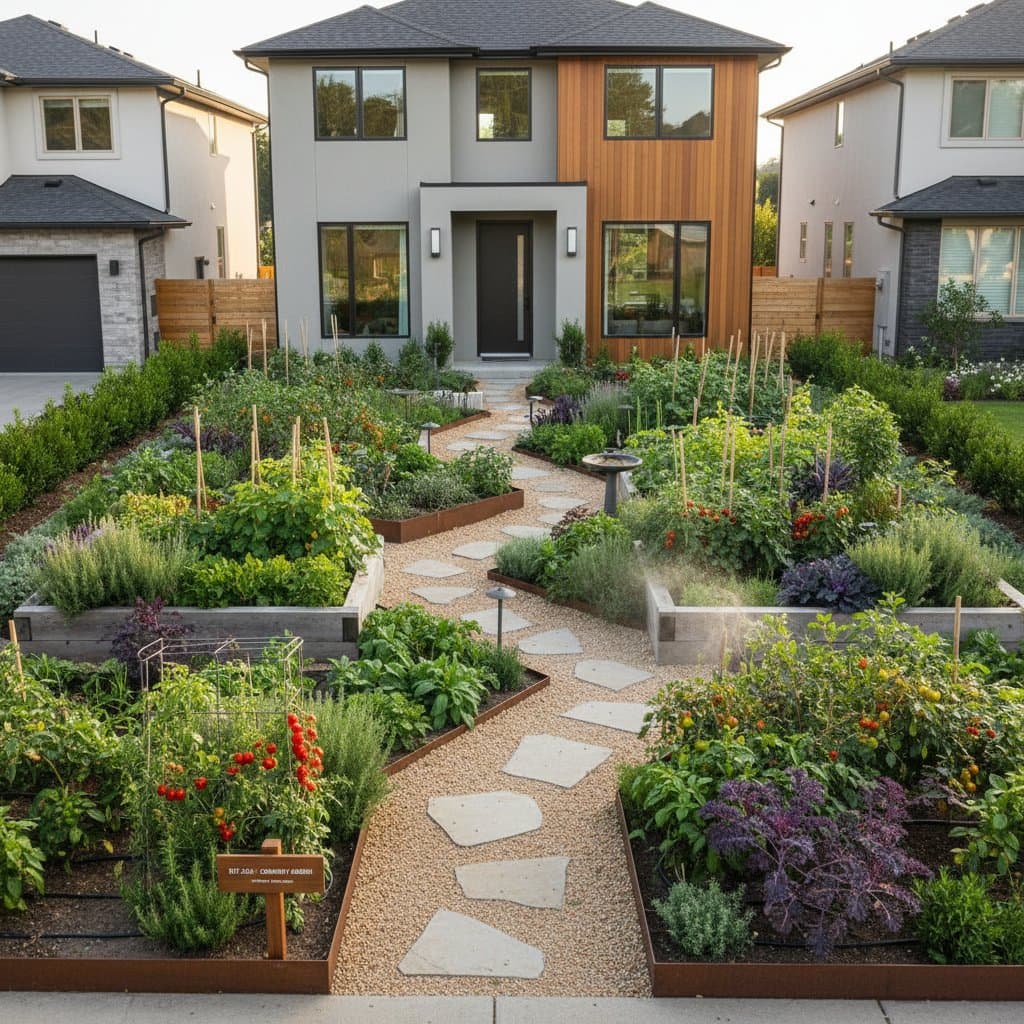
The Rise of Edible Yards in HOA Communities
A young family in a suburban neighborhood replaced their front lawn with a mix of herbs and fruiting shrubs. Their objectives included producing fresh food, reducing water usage, and fostering neighborly interactions. What began as a personal project soon transformed into a local inspiration, prompting others to adopt similar approaches.
Homeowners associations, traditionally focused on uniform lawn aesthetics, now recognize the value in vegetable gardens, pollinator habitats, and fruit trees. These features represent intentional stewardship and environmental responsibility. The shift reflects broader trends toward sustainability in residential settings.
Designing the Front Yard Layout
The design starts with a curved path made from decomposed granite, substituting for a former concrete walkway. Raised beds constructed from cedar delineate clear planting areas and maintain a structured appearance that aligns with association guidelines. This framework supports nontraditional plantings while ensuring visual coherence.
Oregano and thyme, low-growing perennials, extend gently beyond bed edges to create a natural softening effect. Kale, rainbow chard, and dwarf blueberry bushes form layered backdrops, offering seasonal color variations. Plant selections balance ornamental qualities with reliable yields, incorporating both perennials and annuals for continuous interest.
A compact olive tree serves as the focal point near the entry, its silver foliage providing contrast against the lush green of underlying bush beans. An subsurface drip irrigation setup delivers precise watering without surface disruption, preserving the neat presentation demanded by community standards.
Integrating the Porch Area
Adjacent to the front steps, oversized ceramic pots house determinate tomato plants and basil specimens. Glazed in subdued gray hues, these containers harmonize with the house's exterior. The arrangement positions fruits for visibility while minimizing potential mess.
The designer emphasized elegance in food production. Tomatoes climb subtle black powder-coated metal supports that echo the porch railing. This setup demonstrates how edible elements can rival traditional decorative plants in sophistication.
Addressing the Side Yard
Along the driveway edge, where turf previously dominated, strawberries and creeping thyme now form a low-profile edible ground cover. These selections comply with height limits and suppress weeds effectively. A modest rain garden captures roof runoff, featuring edible daylilies and water celery to handle excess moisture.
Such integrations address common site challenges like drainage. They illustrate the practical advantages of edible landscaping in enhancing functionality without compromising curb appeal.
Selecting Materials for Lasting Appeal
High-quality materials elevate edible yards to professional standards, distinguishing them from casual plots.
- Raised beds utilize western red cedar treated with food-safe oil to ensure durability and safety.
- Walkways employ decomposed granite atop a compacted base for water permeability and stability.
- Mulch consists of shredded bark in earthy tones to conserve soil moisture and inhibit weed growth.
- Irrigation involves a subsurface drip network regulated by a smart timer for efficient resource use.
- Lighting features low-voltage LEDs along paths, casting a warm glow to enhance nighttime visibility.
These choices contribute to a refined look that supports vigorous plant health. Discreet hardware avoids any rustic farm-like impressions in a residential context.
Daily Life in an Edible Yard
Homeowners shift from lawn care to cultivation routines. Mornings involve inspecting for harvest-ready items and light pruning of herbs. The automated irrigation handles hydration needs, while on-site composting replenishes nutrients seasonally.
The garden shapes family habits. Meals incorporate freshly gathered ingredients, and children engage with nature by observing pollinators or timing bean harvests. This space promotes education and connection over mere maintenance.
Professional input occurs biannually for pruning advice and crop rotations. The designer notes that successful edible landscapes adapt over time to optimize both beauty and output.
Implementing Your Edible Yard Successfully
Associations increasingly revise policies to accommodate thoughtful edible designs. A strategic approach yields landscapes that satisfy aesthetic rules while providing multifaceted benefits.
- Establish geometric patterns and uniform materials to uphold order and professionalism.
- Blend evergreen perennials with rotating annuals to sustain year-round visual interest.
- Prioritize varieties that offer dual value in productivity and aesthetics.
- Prepare compelling presentations for approval boards, including visual mockups and upkeep schedules.
As adoption grows, these yards redefine residential ideals. They promote harmony between human needs, community standards, and ecological health through deliberate, innovative design.