
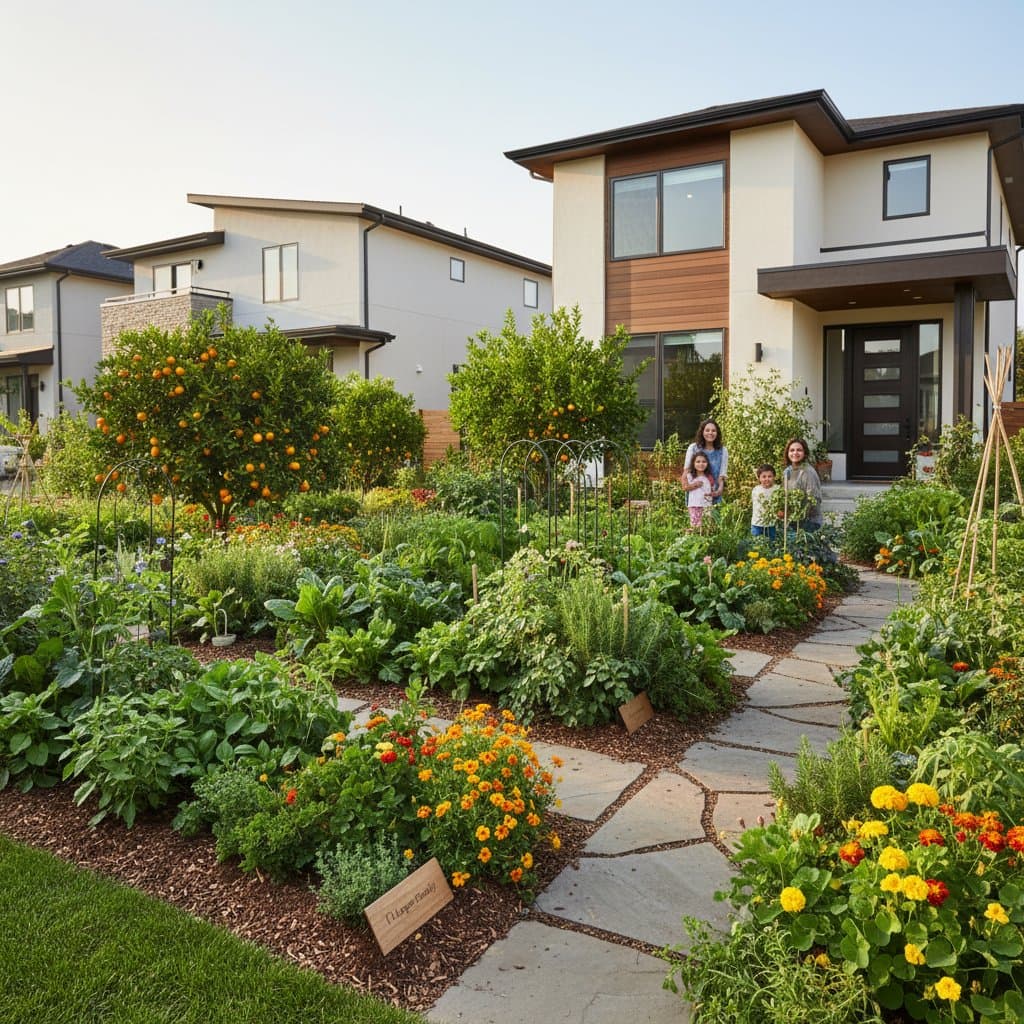
Front Yard Revolution: HOAs Greenlight Edible Food Forests
When Erin and Marcus Lopez purchased their suburban home, they envisioned a front yard that combined aesthetics with functionality. They sought a space where herbs, fruits, and vegetables could coexist alongside flowers and shrubs. To their surprise, the homeowners association approved a design that transformed the traditional turf into an edible food forest.
This project reflects a broader shift. In numerous neighborhoods, homeowners associations now permit front yard gardens that sustain both residents and local wildlife. The Lopez family yard illustrates this evolution in practical terms.
Rethinking the Front Yard
The Lopez family consulted GreenThread Landscape Studio with initial ideas, including sketches of raised beds. Designer Leah Tran recognized opportunities for a more cohesive approach. She noted that the family desired food production alongside strong curb appeal. The team developed a garden structured as a natural ecosystem rather than an isolated vegetable area.
The homeowners association enforced rules on uniformity and visibility. Certain areas required turf retention, and plant heights faced limits near pathways. Tran's team adhered to these constraints by placing low herbs and greens along the sidewalk. Berry shrubs and dwarf fruit trees occupied positions nearer the house. This arrangement conveys deliberate landscaping rather than rebellion.
Layering for Productivity and Beauty
The food forest approach employs vertical layers, each fulfilling specific roles. Groundcovers safeguard soil and control weeds. Shrubs and small trees offer shade and produce fruit. Vines utilize vertical surfaces through trellises. In the Lopez yard, every element justifies its inclusion.
Key layers include:
- Ground layer: Strawberries, creeping thyme, and sweet alyssum, selected for their compact stature and ongoing flowering.
- Mid layer: Blueberry hedges and rosemary shrubs, shaped to form tidy borders along the walkway.
- Upper layer: Dwarf citrus varieties and a single persimmon tree, maintained below association height limits through pruning.
- Vine layer: Pole beans and cucumbers ascend subtle trellises attached to the side fence.
These layers enhance soil vitality and moisture conservation. Mulched walkways paired with drip irrigation minimize upkeep. The layout promotes ecological diversity while upholding a neat appearance that aligns with community expectations.
HOA Collaboration in Practice
Securing approval from the homeowners association required strategic preparation. Tran created visualizations depicting seasonal variations, growth projections, and care routines. The proposal stressed balanced proportions and visual harmony. By underscoring regular trimming and unobstructed paths, the presentation positioned the garden as an enhancement to the neighborhood aesthetic.
The board granted unanimous approval. Board members requested only an annual inspection to verify ongoing care. Following installation, multiple neighbors sought recommendations, impressed by the garden's seamless fit among adjacent properties.
Erin Lopez emphasized the importance of dialogue. She explained that the family avoided confrontation. Instead, they inquired about aligning the proposal with association objectives. Upon reviewing the details, the board acknowledged that the design appeared more refined than typical lawns.
Materials That Match the Architecture
The Lopez residence features a sleek, modern form with white stucco exterior and dark trim. Landscape elements complement these features. Gravel paths in light beige tones harmonize with the walls. Cedar borders introduce warmth, while planters in matte black echo the trim.
These selections unify the garden with the home's style. The front fence, previously a basic picket design, now incorporates horizontal cedar panels with built-in planters. Cascading herbs temper the fence's lines while preserving seclusion. A slim band of native grasses beyond the fence meets association mandates for consistent street views.
Evening illumination extends the garden's accessibility. Low-voltage lights outline the gravel routes and spotlight citrus specimens. This setup provides gentle glow, accentuating surfaces without overwhelming light.
Living with Your Design
Several months post-installation, the garden sustains its vibrancy with ease. Routine tasks focus on trimming and gathering produce instead of grass cutting. The automated drip irrigation operates efficiently, and enhanced soil conditions lessen irrigation demands. The family enjoys increased outdoor time, alongside reductions in food expenses.
Key takeaways for success:
- Collaborate early with your HOA. Present visualizations and care protocols to illustrate thoughtful planning.
- Prioritize structure. Maintain crisp borders and uniform plant elevations for a professional finish.
- Invest in soil health. Sustainable yields rely on nutrient-rich, active soil composition.
- Use materials that match your home. Harmony between landscape and architecture aids integration in conventional settings.
- Think in layers. Integrate ground, mid-level, and canopy plants to maximize aesthetics and output.
- Plan for community. Such gardens foster social ties as effectively as they supply nourishment.
Sustaining Edible Landscapes in Regulated Communities
Edible front yards have transitioned from unconventional concepts to viable options. Strategic planning and partnership enable their success even in structured environments. Homeowners gain productive spaces that enrich daily life and neighborhood dynamics.