
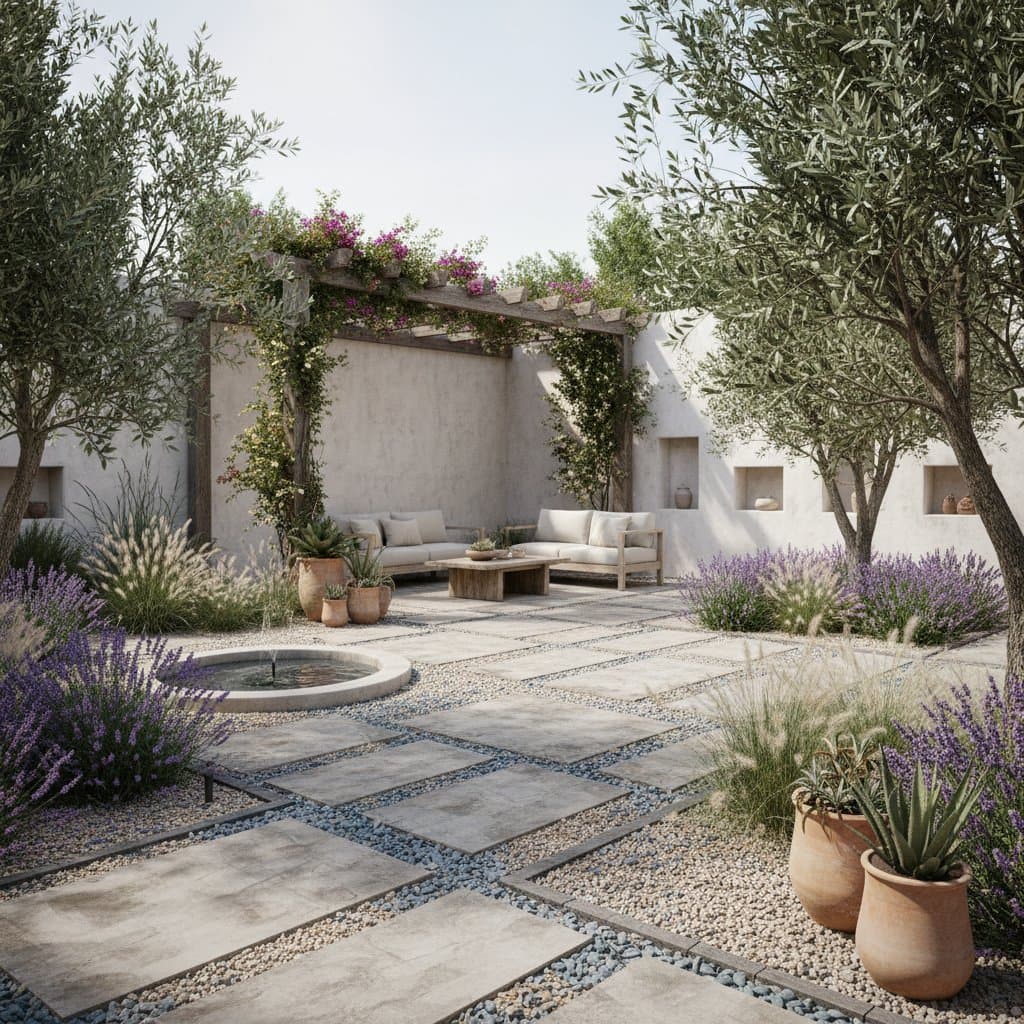
The Rise of Gravel Courtyards in 2025 Landscape Design
Sam and Lucia purchased a hillside home with a vision for an outdoor space that appeared timeless, conserved water, and integrated with the local environment. They sought a design resilient to intense summer heat, stable during heavy rains, and suitable for casual social events. Gravel emerged as the ideal material, offering both simplicity and refinement.
At a Glance
- Homeowners: Sam and Lucia, architects who work remotely
- Location: Coastal hillside community
- Area: 1,800 square feet of usable outdoor space
- Designer: Rachel Mendez Studio
- Contractor: Terra Verde Landscapes
- Key Materials: Pea gravel, decomposed granite, limestone pavers, corten steel borders
- Selected Plants: Olive trees, lavender, rosemary, drought-resistant grasses
Exploring the Courtyard Layout
The courtyard entry features a modest gate flanked by olive trees. A base of compacted decomposed granite leads to pea gravel in the seating zone, creating a seamless textural shift. This arrangement promotes a sense of natural progression while providing firm support for high-traffic spots and furnishings.
A linear limestone bench anchors the main social area. Positioned on a stable slab with corten steel borders, the bench prevents gravel displacement into garden beds. Over time, the steel acquires a rich patina that complements the gravel's warm tones and the olive trees' light bark.
Opposite the bench, a compact fire pit occupies a round base of crushed granite. Rainwater drains swiftly from this surface, and the subtle crunch underfoot enhances the sensory experience. The design establishes an enclosed yet airy outdoor setting without physical barriers.
Building Layers of Texture and Color
Texture defines the courtyard for Sam and Lucia. The designer combined fine decomposed granite for walkways with 3/8-inch crushed limestone in communal zones. The granite's powdery softness contrasts the limestone's sharp contours, preventing visual uniformity.
The planting scheme extends this color harmony. Olive and lavender foliage with silver tones mirror the gravel's subtle coolness, while rosemary and dwarf myrtle add richer green accents. Concealed low-voltage lights in the beds produce a soft, flickering illumination that highlights the gravel's evening sparkle.
Limestone elements link the gravel to the stucco residence. Each piece receives hand-chiseled edges for added depth, contrasting the fluid gravel beneath.
Essential Planning Factors
Effective gravel courtyards require thorough groundwork. Install a compacted road base layer under landscape fabric to suppress weeds and maintain evenness.
Perimeter drainage channels guide excess water to a dry creek bed lined with river rock. This setup avoids standing water and complements water-efficient plants.
Select furniture with broad, stable bases, such as powder-coated metal chairs. Opt for solution-dyed acrylic cushions that withstand sun exposure and dampness.
"Gravel performs optimally when every element accounts for user interaction," noted Rachel. "Proper foundation, borders, and selections ensure ease and durability."
Achieving Comfort Through Sustainability
Gravel conserves water while improving usability by regulating temperatures. Light surfaces reflect daytime heat, making the area cooler than solid concrete or stone alternatives. Stored ground warmth lingers into evenings, fostering ideal conditions for outdoor meals.
This method aligns with growing preferences for site-responsive landscapes. Rather than demanding irrigated turf, focus on dry-climate materials. Gravel aids deep-rooted species that establish quickly with minimal ongoing hydration, suiting arid zones.
Consider regional climate data during planning. In Mediterranean-like areas, pair gravel with native succulents for enhanced biodiversity. Test soil permeability on-site to customize drainage depth, typically 4 to 6 inches for optimal flow.
Integrating Gravel Across the Property
Extend the gravel scheme to side paths and the driveway for cohesive aesthetics. Use slim steel dividers to separate gravel from vegetation, preserving neat boundaries. These markers delineate functional areas like dining, relaxation, and cultivation without grade changes or enclosures.
A modest gravel patio fronts the house, capturing morning light. Equip it with a bistro table and chairs amid rosemary and thyme for sunrise routines. Material repetition unifies the grounds, establishing a consistent visual flow.
For larger estates, scale gravel applications strategically. Allocate 60 percent of hardscape to gravel in water-scarce regions to maximize conservation. Source aggregates locally to cut carbon emissions from shipping.
Embracing Daily Use and Maintenance
Several months post-installation, Sam and Lucia view the courtyard as central to their lifestyle. It hosts visitors, highlights ocean vistas, and accommodates solitary reflection or group meals. Daily light and weather variations refresh the space's character.
The gravel's auditory and tactile qualities promote unhurried pacing, drawing people to pause. Maintenance involves periodic raking and material replenishment, a modest effort for such refined durability.
To adopt this style, begin modestly with a gravel nook or pathway. Select regionally sourced stones to minimize environmental footprint and blend with local palettes. Consult soil tests and consult professionals for base compaction rates, aiming for 95 percent density to prevent settling.
Gravel courtyards gain prominence in 2025 for their proven utility. They deliver unmatched texture, ecological harmony, and flexibility, redefining outdoor environments with enduring grace.